
-
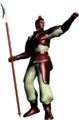
Dynasty Warriors render
-
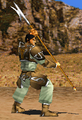
Alternate outfit
-
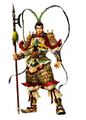
Dynasty Warriors 2 concept
-
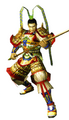
Dynasty Warriors 2 render
-
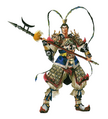
Dynasty Warriors 3 concept
-
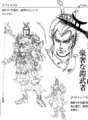
Rough concept
-
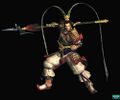
Dynasty Warriors 3 render
-
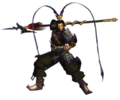
Dynasty Warriors 3: Xtreme Legends alternate outfit
-
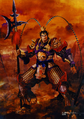
Dynasty Warriors 4 artwork
-
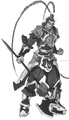
Rough concept
-
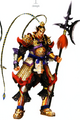
Polished concept
-
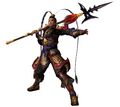
Dynasty Warriors 4 render
-
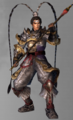
Alternate outfit
-
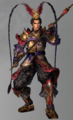
Alternate outfit 2
-
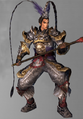
Alternate outfit 3
-
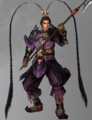
Alternate outfit 4
-
Super-deformed visual
-
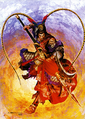
Dynasty Warriors 5 artwork
-
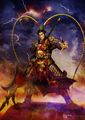
Alternate artwork
-
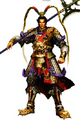
Polished concept
-
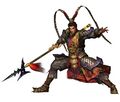
Dynasty Warriors 5 render
-
Alternate outfit
-

Dynasty Warriors DS artwork
-
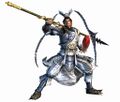
Dynasty Warriors Online render
-
Dynasty Warriors 6 artwork
-
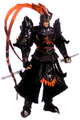
Rough concept
-
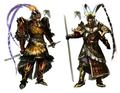
Rough concept 2
-
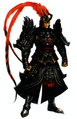
Polished concept
-
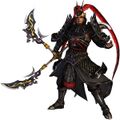
Dynasty Warriors 6 render
-
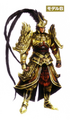
Alternate outfit
-
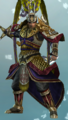
Dynasty Warriors 6: Empires alternate outfit
-
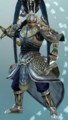
Alternate outfit 2
-
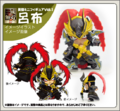
Super-deformed visual
-
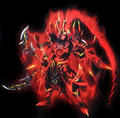
Fury form concept in Dynasty Warriors: Strikeforce
-

Rough concept
-
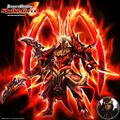
Fury form render
-
Alternate outfit
-

Alternate outfit 2
-
Alternate fury form
-
Alternate fury form 2
-
Alternate fury form 3
-
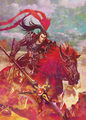
Dynasty Warriors 7 artwork
-
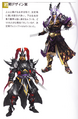
Rough concept
-
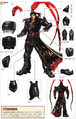
Polished concept
-

Dynasty Warriors 7 render
-

Alternate outfit
-
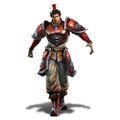
Dynasty Warriors downloadable costume
-
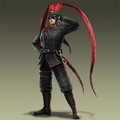
Original downloadable outfit
-
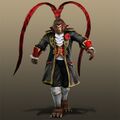
Second original downloadable costume
-

Super-deformed visual
-
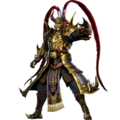
Dynasty Warriors: Overlords special costume
-

Road to Dragons collaboration portrait
-
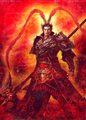
Dynasty Warriors 8 artwork
-
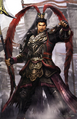
Shin Sangoku Musou 15th Anniversary artwork
-
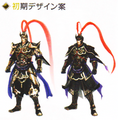
Rough concept
-
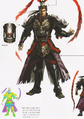
Polished concept
-
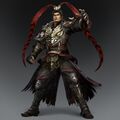
Dynasty Warriors 8 render
-
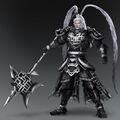
HOTEI collaboration downloadable costume
-
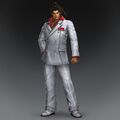
Original downloadable costume
-
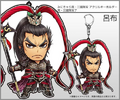
Super-deformed visual
-
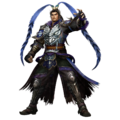
Dynasty Warriors: Unleashed water element render
-
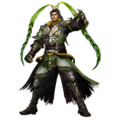
Wood element render
-
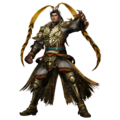
Light element render
-
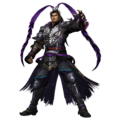
Dark element render
-
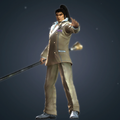
Alternate costume recolor
-
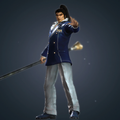
Alternate costume recolor 2
-
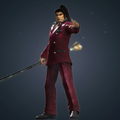
Alternate costume recolor 3
-

Promotional Render
-
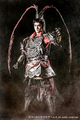
Butai Shin Sangoku Musou theater production photo
-
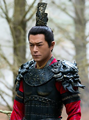
Dynasty Warriors live action movie production photo
-
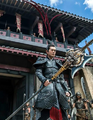
Production photo 2
-
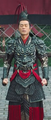
Production photo 3
-

Sangokushi Puzzle Taisen collaboration portrait
-
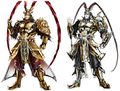
Dynasty Warriors 9 rough concept
-
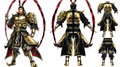
Polished concept
-
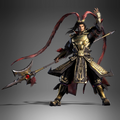
Dynasty Warriors 9 render
-
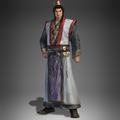
Dynasty Warriors 9 civilian appearance
-
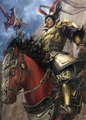
Shin Sangoku Musou Apuri portrait
-
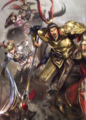
Alternate portrait with Lu Lingqi, Chen Gong, and Zhang Liao
-
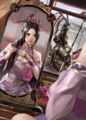
Alternate portrait with Diaochan
-
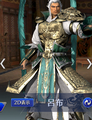
Mystic outfit
-
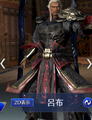
Abyss outfit
-
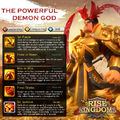
Rise of Kingdoms collaboration render
-
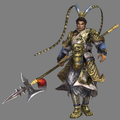
Warriors Orochi alternate outfit
-
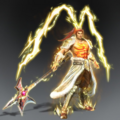
Warriors Orochi 4 deified form
-
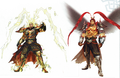
Rough concept
-
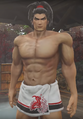
Warriors All-Stars bath outfit
-
-
Lu Bu (onyomi: Ryo Fu) is a general of the late Han Dynasty who is infamous for his many betrayals in the central plains. Like many warlords of the era, he attempted to establish himself as an independent power before he met his end against Cao Cao's forces. Romance of the Three Kingdoms famously dubs him to be the mightiest warrior of his time, though both versions of him were equally known for his fickle personality and his lacking forte in tactics. His daughter is Lu Lingqi.
His trademarks in the Dynasty Warriors series are his high stats, his vastly superior moveset, his unique horse, and his theme song which doubles as the musical motif for several of the games' opening sequences. The exclamation "Do not pursue Lu Bu!" (呂布を深追いするな! Ryo Fu wo fukaoi suru na!) is fondly remembered by fans. He sometimes shares the spotlight with the series's other iconic character, Zhao Yun. Lu Bu reached twenty-first place with fans in Gamecity's Dynasty Warriors 7 and Dynasty Warriors 8: Xtreme Legends character popularity polls. The latest poll for the eighth installment puts him in thirty-third. The character poll for overseas fans puts him in first place for the Other division, second in the semi-finals, and first in the final round. He also ranked sixth in the first survey for most popular general in Shin Sangoku Musou Online Z.
This counterpart also has a character image song titled KING OF DESTROYER and a duet with Diaochan called REASON TO FIGHT.
Role in Games
- "A legend of your age, and yet you side with the devil. I suppose you thought that feeding off his scraps would provide you sufficient prey!"
- "And I was right. He has led me to the greatest prey of all! Hunting time!"
- ~~Tadakatsu and Lu Bu; Warriors Orochi
Dynasty Warriors
Lu Bu is a warrior who wants to prove his strength to all. First serving his adopted father, Dong Zhuo, he defies the Allied Forces at Hu Lao and Si Shui Gates. Known for his ferocity in the former battle, Yuan Shao warns his officers to steer clear of him in every game. In most titles, he has a special duel with Liu Bei and his brothers during the conflict. Not one to trust Dong Zhuo, he often gives into Diaochan's deception and rebels against his former master in their story modes. In other characters' scenarios, he wanders the land after his benefactor's death and steals Xia Pi away from Liu Bei. Facing Cao Cao and Liu Bei's armies at the castle, Lu Bu dies after his defeat.
His story in Dynasty Warriors 3: Xtreme Legends has him start as an obedient subject to Dong Zhuo. Lu Bu doesn't care for the portly one's ambitions and only desires to fight. After their victory at Hu Lao Gate, Dong Zhuo's influence grows and he has a portion of the alliance submit to him. Lu Bu continues to aid Dong Zhuo by killing Cao Cao at Guan Du and rescuing his lord from Liu Bei at Wan Castle. While Liu Bei's army tries to flee from capture, his forces are stopped by Lu Bu at Chang Ban. Upset at the turn of events and seeing no reason for them to continue fighting, Diao Chan and Zhang Liao desert Dong Zhuo. Lu Bu, who wants them to help him, retrieves their loyalty after he catches them at the Five Passes. The trio work together to rebel against Dong Zhuo, putting an end to the tyrant at Chi Bi and making Lu Bu the land's new leader.
Lu Bu only serves Dong Zhuo until they defeat the Allied Forces in Dynasty Warriors 4. Soon after their victory over Yuan Shao, he slays his former liege. He is labeled a threat to the rest of the regional lords and survives their siege against him at Xia Pi. Cao Cao, Sun Jian and Liu Bei try to stop him, but his forces prevail over all others. Lu Bu becomes the land's great unifier in the new time of peace.
His Legend Mode in the Xtreme Legends expansion details his indomitable defense at Hu Lao Gate. After slaying many soldiers, Sun Jian and Cao Cao challenge him. Once they fall, the three oath brothers face him. When the trio are cut down, Yuan Shao declares that taking the gate is a lost cause and orders his army to retreat.
Dynasty Warriors Advance gives Lu Bu his own campaign starting in the Yellow Turban Rebellion where he single-handedly eliminates Zhang Jiao and his followers. Dong Zhuo takes notice of his might and adopts him, though the warrior grows weary of the tyrant's demands during their battle against Yuan Shao's coalition. Tired of being viewed as a lapdog by everyone, he betrays Dong Zhuo and usurps his position only to disappear after Cao Cao overwhelms him through sheer numbers.
Years later, Lu Bu avenges himself by barging his way through the Battle of Chi Bi to defeat Cao Cao before turning on Wu. Even with Guan Yu and Zhang Fei arriving to stop him, he manages to deal a serious blow against Sun Jian and finishes off the Sun family at He Fei. He then crushes Liu Bei's forces at Yi Ling, leaving Wei as his final opponent. Upon facing Cao Cao, the warrior finds himself surrounded by Sun Jian and Liu Bei who survived their previous defeats. Lu Bu slays all three leaders and overshadows their exploits in history.
Dynasty Warriors 5 has Lu Bu additionally defend Si Shui Gate. After the battle of Hu Lao Gate, he kills Dong Zhuo on Diao Chan's requests. His adopted father's followers disagreed with Lu Bu's actions and chased him out from the capital. Left with no land of his own, he briefly wanders into Yuan Shao's care and assists the battle against Gongsun Zan at Chang Shan. Though his rival is defeated thanks to Lu Bu's efforts, Yuan Shao begins to fear Lu Bu and wants the warrior dead due to his past treachery. Liu Bei shelters him at Xia Pi, but he takes the lord to be a weak ruler. He steals the position away from his new benefactor and faces the army against him with his might. Alone and disappointed, he decides to ride off on Red Hare to search for a land worthy of him. Diao Chan and Zhang Liao loyally follow him. He shares his Legend Mode with them in the Xtreme Legends expansion, which details when he recruits Chen Gong.
Lu Bu's ending scene in Dynasty Warriors: Online has him watch the land with Red Hare. Dissatisfied by a land with no battles or conflict, he decides to ride out in search of new challenges while allowing the player to accompany him.
Lu Bu has already killed Dong Zhuo when his story starts in Dynasty Warriors 6. Driven from the capital, Chen Gong gives his lord an interesting alternative: make a new path for himself in the chaos and take the land. He gains a new base for his forces by forcing Liu Bei's forces away from Xia Pi. Though it has no business with him, he dives straight into the battle between Cao Cao and Yuan Shao at Guan Du, defeating both parties with his army. Hearing the petty ambitions of Liu Yong, Yan Baihu, Wang Lang, and other individuals from Jiang Dong, he deals with them personally at Shi Ting. When Sun Quan joins forces with Liu Bei to end Cao Cao at Chi Bi, Lu Bu is fascinated by the battle at sea, routing both leaders. This angered Dian Wei and Zhou Yu, who then attempt to avenge their fallen masters, uniting their talents to end Lu Bu.
Upon their defeat, the armies from the battle are scattered and Lu Bu's army heads towards Mt. Ding Jun. Opposing them are the resurrected Dong Zhuo and Zhang Jiao, both who are spiteful towards Lu Bu. They escape from death a second time and unite with Lu Bu's previous opponents in an attempt to eradicate the warrior. Undeterred, he faces them at Hu Lao Gate. Slaying his entire opposition in the battle, he becomes the land's new ruler. The wars don't end, however, as several other forces march against him during his ending. Even so, Lu Bu is pleased to have ample opportunities to fight someone.
In Chapter 2 for every kingdom in Dynasty Warriors: Strikeforce, Lu Bu can be seen above the weapon Dong Zhuo placed at Hu Lao Gate, Bi Xie. Similar to previous games, he will betray Dong Zhuo and start a campaign of his own to conquer the land. He is killed at Bai Men Tower but raises from his grave in Chapter 6, causing the three kingdoms to form another alliance to bring his reign of chaos to an end. Lu Bu's otherworldly strength corrupts the land's spiritual guardians, the kingdoms' respective animal avatars. The Allied Forces manage to seal them all and kill Lu Bu once more at Xia Pi Castle. During the second chapter of the Conqueror's Arc in Shin Sangoku Musou Multi Raid 2, Lu Bu rises from the dead once more to save Diao Chan from Xiang Yu's assault. Eager to face his new rival in a proper battle, he willingly joins forces with his former enemies to make this happen.
Dynasty Warriors 7 has Lu Bu appear briefly in the three kingdoms' Story Modes. During Wei's Story Mode, he attempts to capture a fleeing Cao Cao through the capital yet fails due to Chen Gong's intervention. He acts as the beefy guard for Hulao Gate and kills Dong Zhuo after the conflict. Becoming a landless wanderer, he barges into the Battle of Xu Province to oppose Cao Cao. Lu Bu brazenly offers his arm to Liu Bei and is accepted into Liu Bei's custody. When his benefactor drops his guard, however, Lu Bu steals Xu Province for himself. To counter, Liu Bei joins forces with Cao Cao at Xiapi. When the captured Lu Bu struggles against his bonds, he arrogantly offers his service to Cao Cao, thinking that his might is worthy enough for him to be spared. The warlord doesn't fall for the enticement and orders for Lu Bu's death. As Lu Bu is dragged away kicking and screaming, Liu Bei respectfully averts his eyes away from the sight.
His first Legendary Battle lets players control him at Hulao Gate. A reenactment of Dong Zhuo's death occurs for his second Legendary Battle due to Diao Chan's influences. Lu Bu's third Legendary Battle lets him fight against Cao Cao and Liu Bei's coalition at Xiapi.
The Xtreme Legends expansion adds a Hero Scenario regarding his path of treachery after Dong Zhuo's death. This particular betrayal details his mutiny against Liu Bei during the latter's absence at Xiapi. The invaders first antagonize the defenders' camps before heading north. Lu Bu and company then free an imprisoned Cao Bao to spread confusing rumors amongst the castle's guards. Once Zhang Fei is chased out of the castle, Lu Bu then faces an enraged Liu Bei and Guan Yu.
Victory comes easily to the warrior, and he prides himself on his accomplishment. Of course, the feeling is short-lived when Cao Cao's army surrounds and captures the castle. When his own men turn traitor, Lu Bu loses his life.
In Dynasty Warriors Next, Lu Bu makes his appearance in the second chapter where he eventually betrays his lord at Chang'an alongside Diaochan. During the fourth chapter, his theft of Xu Province leads to his defeat by Xiahou Yuan whose lord executes him. His personal chapter begins right after Dong Zhuo's death. To soothe Diaochan's sorrow, he vows to end the wars for her sake. His conquest of Puyang forces the other warlords to unite against him, though their lands end up falling to the warrior's own might.
But as Lu Bu's rampage continues, his followers begin to doubt his methods. Things come to a head when Wang Yun conspires with the remaining leaders to isolate him. For her part, Diaochan turns against her lover and condemns him for perpetuating the chaos with his strength. Unwilling to abandon his warmongering nature, Lu Bu harbors no doubts in winning as he single-handedly annihilates the coalition at Luoyang. When Diaochan surrenders, he opts to leave the dancing maiden in peace if it means not hurting her with his presence. This kind act catalyzes the couple's reconciliation with one another, leading to their resumed travels across the land. As Lu Bu's campaigns prolong the turmoil of the land, they also end up attracting like-minded individuals who share his desire to end the conflict.
Dynasty Warriors 8 has Lu Bu mainly reprising his role from the previous installments. His personal scenario is a fictional account of the battle at Xiapi which has him win against all odds through sheer might.
In Wei's hypothetical route, Lu Bu's spirit is summoned alongside those of Zhang Jiao, Dong Zhuo, and Yuan Shao by Zuo Ci as part of his rebellion against Wei in Xuchang. Lu Bu attempts to stop Cao Pi and his allies from approaching the palace courtyard where Zuo Ci dwells, but is defeated and banished back to the afterlife.
The Xtreme Legends expansion gives him an in-depth Story Mode beginning him serving Ding Yuan to slay the Ten Eunuchs. Proving his might, he later betrays Ding Yuan and chooses to serve Dong Zhuo. Together with both Zhang Liao and Diaochan, they manage to cut through the allied forces assembled at Hulao Gate and escape with the emperor. During this battle, Chen Gong is awed by Lu Bu's might and begins to favor him over his current master, Cao Cao. As he becomes sympathetic to Diaochan and slays Dong Zhuo at Chang'an, he additionally wins Zhang Liao's loyalty. Jia Xu rallies Dong Zhuo's remaining forces to overthrow Lu Bu. Lu Bu is forced to escape without Diaochan.
At Changshan, Lu Bu fights for Yuan Shao against the Heishan bandits led by Zhang Yan. When the battle is over, he leaves Yuan Shao.
He is now independent and decides to obtain his own base. Chen Gong defects at Puyang in order to assist Lu Bu's charge. Although they were able to defeat Xun Yu, they are forced to flee from Cao Cao's massive army and seek refuge under Liu Bei at Xiapi. Lu Bu deems his caretaker weak and repels Zhang Fei who had been guarding the place in his brothers' absence. Yuan Shu barters with Lu Bu to attack Liu Bei's rear in exchange for supplies. Unfortunately, Yuan Shu turns his back on his word, prompting Lu Bu to ally himself once again with Liu Bei. Together, they easily defeat Yuan Shu's forces at Shouchun. Rather than slaughter Yuan Shu's forces, Lu Bu uses his strength to intimidate both sides to call for a truce –by throwing his halberd and hitting it with an arrow– before returning to Xiapi.
Liu Bei allies with Cao Cao and attacks Lu Bu. His initial failure at Xiaopei prompts the two cohorts to corner Lu Bu at Xiapi. During the battle, Lu Bu's strategy after the flood is break the castle walls to allow the water to seep out. Lu Bu seemingly defeats Cao Cao but is deceived into an ambush. He, Zhang Liao, and Chen Gong are captured by Xiahou Yuan and Xiahou Dun. Lu Lingqi arrives to their rescue, but Lu Bu doesn't wish for his daughter to share their fate and yells for her to leave them.
The captured trio are brought before Liu Bei and Cao Cao; the latter asks them if he's through struggling. Lu Bu is then asked if he would like to serve Cao Cao, but the defeated general quickly rebuffs the offer. When asked by Cao Cao if he'd like to shelter Lu Bu again, Liu Bei states the general should be executed. Lu Bu thrashes wildly against the guards holding him before being pinned by Xu Zhu's flail and killed by Cao Cao.
His hypothetical route has him triumph over Cao Cao at Dingtao with the help of Yuan Shao and Liu Bei. He then begins his conquest throughout the land, defeating Cao Cao at Xu Province, Yuan Shu and Sun Ce at Wu territory, and finally Yuan Shao at Guandu. Now turning his attention to Chang'an, Lu Bu moves out to attack both Li Jue and Guo Si who had earlier chased the general out of the capital. Despite meeting resistance from his previous allies and enemies, Lu Bu slays them all and immediately meets Emperor Xian. Intimidating the man and calling him useless for allowing people like Dong Zhuo to cause strife, Lu Bu takes the throne. Upon exiting the palace, he declares to his men that the chaos has finally been conquered.
Dynasty Warriors: Unleashed has Lu Bu appear as a recurring adversary for the player during the first three story campaigns. While fought as a mid-boss in the Luoyang campaign, he becomes an allied unit after relenting to Diaochan's appeal.
Lu Bu's bond story recounts his betrayal of Ding Yuan and Dong Zhuo. Not content to simply work as a lowly inspector in Yu Province, he agrees to join forces with Yuan Shu only to be bested by the combined might of Liu Bei and Cao Cao. With no one left to trust him, Lu Bu gets beheaded just like Ding Yuan.
Lu Bu's story in Dynasty Warriors 9 begins during his service with Ding Yuan. Having missed both the Yellow Turban Rebellion and the Ten Eunuchs' Rebellion, Lu Bu grows increasingly irritated by the lack of large-scale battles. Accepting Dong Zhuo's promise for entertaining battles and Red Hare in exchange for Ding Yuan's head, Lu Bu becomes the man's adoptive son.
Though he rescues his new father from Cao Cao's assassination attempt, Dong Zhuo shouts at his son for allowing the assailants to escape, but Lu Bu angrily responds that killing fleeing opponents would provide him with no sport. Finally allowed to leave for open battle, Lu Bu crushes Yuan Shao's alliance and defeats the nobleman at his own camp. While victorious against Yuan Shao, some coalition soldiers slipped past Hulao Gate, causing Dong Zhuo to relocate the capital. Infuriated at being forced to retreat after a major victory, Lu Bu is goaded by Diaochan into rebellion, and the pair slay their lord at Chang'an.
Scoffing at Wang Yun's idea for peaceful land without battles, Lu Bu leaves the capital in the hopes of joining battles between Yuan Shu and Yuan Shao. He becomes dissatisfied with both men, however, as Yuan Shu refuses to give troops for the general to use while Yuan Shao's only task was to fight a small group of bandits led by Zhang Yan before insisting in waiting for a prolonged amount of time before an actual decisive battle. Though he initially wishes to join Cao Cao next, one of the warlord's strategists, Chen Gong, proposes that Lu Bu steals the Yan Province while its lord is away instead. Taking Puyang with ease, Lu Bu sweeps through and defeats Cao Cao at Dingtao, but the warlord had prepared troops in the rear to retake his cities while Lu Bu was preoccupied at Dingtao.
Forced to wander again, Lu Bu steals Liu Bei's land at Xu Province he had recently been entrusted with by the late Tao Qian, but is again denied immediate battle as his army still needs to recover before another battle with Cao Cao. Only under the persuasion of his daughter and retainers, Lu Bu then begrudgingly acts as a mediator between Liu Bei and Yuan Shu in order for at least one of them to forge a strong alliance. Despite his victory, Liu Bei turns on Lu Bu and advances on Xu Province with Cao Cao's men.
Faced with repeated defeats, Lu Bu's men are pushed back until they finally reach Xiapi Castle, which is then flooded by Cao Cao's men. Backed into a corner and faced with countless soldiers and generals, Lu Bu gleefully enters the battlefield for the first time. Finally receiving the perfect stage to showcase his might to the world, Lu Bu charges in straight to face the insurmountable odds.
His capture and execution remain largely unchanged with him offering his services to Cao Cao and join his army, but Liu Bei dissuades Cao Cao from accepting the offer, infuriating Lu Bu as he condemns Liu Bei for sealing his fate. Cao Cao then takes his sword from Xiahou Yuan, who was going to be Lu Bu's executioner, and with some final parting words to the beast Lu Bu, he personally slays the general.
Warriors Orochi
In Warriors Orochi, Lu Bu becomes one of the Serpent King's top officers. Unlike other generals, little is indulged on how or when this occurs. He only serves Orochi out of respect of the demon's incredible power; he is biding his time until he is powerful enough to slay Orochi himself and claim the title of the strongest. Until then, Lu Bu serves the Orochi Army, realizing the most powerful warriors of both China and Japan will oppose the Serpent King. Aside from Orochi, he finds that the only ones strong enough to provide him with a challenge are Keiji and Tadakatsu. Also, Lu Bu is one of the only two characters in the game to make appearances for all four factions opposing Orochi, if he is impressed by each faction's capabilities and may defect to them, and also one of the two that have unique dialogues with Orochi when encountered in the final stages. The only other character to have this trait is his Samurai Warriors counterpart, Tadakatsu Honda.
Lu Bu continues serving the remnants of Orochi's army in the sequel. Unimpressed by Kiyomori's methods, he rebels against him late in Wu's story with his band of loyal officers. After dealing with Kiyomori, he decides to prove himself as the greatest by taking on Orochi X. Sun Jian takes advantage of Lu Bu's momentum and uses it to end the serpent king. It is unknown what happened to Lu Bu after Orochi's death though Yoshitsune briefly spots Lu Bu riding his horse.
He teams up with Tadakatsu and Keiji to end Orochi in their dream mode. While his teammates want to assist the mutual Liu Bei, Orochi's soldiers try to keep them trapped within the garrison. Lu Bu's personal goal in the stage is defeating several of them and frighten them to open the gates.
After Orochi's second fall, Lu Bu was content to wander the land with Diaochan in the original timeline of Warriors Orochi 3. By chance the couple happened to stumble upon the battle at Tong Gate. Although Lu Bu was confident that his strength would be enough to see them through, he is quickly beaten by Nezha. Pleading Diaochan to save herself, a wounded Lu Bu is forced to flee instead. Humiliated by the loss and angered by Diaochan's death, Lu Bu tracks the robotic warrior throughout the game's story to defeat him and redeem his honor. If Diaochan is saved by the coalition and present at Osaka Castle, her simple request is enough to gain Lu Bu's allegiance. To other members of the coalition, however, he insists that he is only with them for another chance to challenge Nezha.
Lu Bu and Diaochan serve Dong Zhuo in one of the downloadable stages, "Dong Zhuo's Ambition", creating a paradise of beautiful women for their master. In "Lu Bu's Revenge", he is given a chance to redeem himself by defeating Nezha.
In Ultimate, one of his multiple imposters are created from Divine Mirror that Tamamo inherit, prior Chapter 7's timeline changes. In Chapter 7's main story mission, Lu Bu is among those sent to Fu Xi's past at the mystic realm. During his time, he meets Nezha's incarnation prior to his first death, another event the general is a witness to. After sealing the fallen hero turned ultimate villain, Lu Bu wonder where Nezha is now to fight him while he's still human, as Fu Xi told him that Nezha is killed by Orochi then Susano'o will revive him in the future.
After returning to the main timeline, the last Lu Bu duplicate manipulates Chen Gong at Wan Castle to set a trap on Tadakatsu, Zhuge Dan, and Lu Xun, with cyborg Nezha's duplicate pretending to be a neutral unit to be saved by the coalition. However, the plan is foiled when he was revealed by Divine Mirror that coalition inherited from the alternate past timeline, the duplicates' last plan is to set fire to the castle to burn Chen Gong and the coalition to death; but apparently, they managed to survive and confront Tamamo, as her true form is revealed at the end. In the revamped Mirror Realm mission, the duplicates of Lu Bu and Nezha's plan are fully foiled when the coalition went back to the aforementioned mission to make things better. When Tamamo revealed to be Kyūbi prior Mirror Realm missions unlocked, Lu Bu will distract Kyūbi's army to fight him at Dongkou. This allows Zhou Yu, Diaochan, and Sanzang to set a trap reducing the fox's army so the four can proceed to imprison Kyūbi to the mirror. However, she managed to escape after calling Susano'o and Kaguya's duplicates to deal with Lu Bu and his allies.
During the events of Warriors Orochi 4, Lu Bu is one of the first humans to reenter the new world. He is quickly met by Odin and Da Ji, who offer him an Ouroboros Bracelet and the promise to fight never-ending battles. Eager for such times to come, he continues to aid them. With his power, they are able to defeat Shuten Dōji and release his power to form the God of Destruction, Orochi X, who is needed for Yggdrasil's revival. Chen Gong, however, knowing that Yggdrasil's revival would mean the destruction of the world, intentionally begins setting his lord up to eventually rebel against Odin.
At Guangling, Lu Bu is allowed to fight the Coalition to his heart's content, taking high pleasure in fighting both gods and other deified humans. When Odin tells him to back off and leave as these strong beings are needed to power Yggdrasil, Lu Bu instantly turns his back on Odin and takes his army to join the Coalition.
Lu Bu later joins the Coalition's attack on Ōsaka Castle in order to secure Zeus's body. During the battle, he ends up dueling against Munenori Yagyū, who wishes to see the full strength of those that would dare to fight Odin. After his defeat, Munenori surrenders and joins the Coalition.
During Ultimate, Lu Bu retains his spot in the Coalition and is present during the final battle against Odin at the Spring of Mimir. During the final battle against Hades should Perseus be revived beforehand, Lu Bu will be tasked with advancing from the southeast, where he will encounter illusions of both Yoshitsune and Benkei. When the Coalition finally separates Odin's soul from Ygdrassil and removing the tree's power source, Lu Bu accompanies both Yang Jian and Mitsunari in seizing one of Hades's altars.
Warriors All-Stars
Lu Bu is initially apathetic to the Warriors All-Stars world's plight—even with Tamaki's plea and explanation—and simply wants to return home. He sides with Tamaki's forces to prove his might.
Dynasty Tactics
Lu Bu primarily acts as one of Liu Bei's early antagonists in Dynasty Tactics. He can either be exterminated quickly by Cao Cao and Liu Bei at Xia Pi or temporarily join forces with the latter. In the second scenario, the two lords form an alliance to end Yuan Shu. Soon after their victory, they are outmaneuvered by Cao Ren's army. Reinforcements miraculously come when Liu Biao aids them and their land is saved. During their victory banquet, however, Lu Bu kills their savior based on a loose report that he was a cohort with Cao Cao. Shocked by the violence, Liu Bei departs and declares war on him.
When Lu Bu is defeated, his life is spared but he rebounds later to fulfill his desire for conquest. He is supposedly killed after his defeat. In one of Wu's scenarios, however, he can be recruited in the last chapter. Players can also fight his Dynasty Tactics counterpart in Dynasty Warriors 3: Xtreme Legends, as he leads a heavily armed army and challenges anyone to defeat him at Chi Bi.
Dynasty Tactics 2 portrays him as slightly less arrogant and also introduces his daughter, Lu Ling Qi. He is one of the possible rulers in the game who can conquer the land. In one of his story branches, he learns from Cao Cao that his ally, Liu Bei, wishes to betray him and personally storms Liu Bei's castle to murder him. He seemingly dies from an archer volley in a charge against Cao Cao's troops. However, he survives and joins forces with the stunned Ma Chao to rebuild his ranks. With his new army, he eventually defeats Wei and perpetuates war in the land.
Kessen
During the prologue movie in Kessen II, Liu Bei and Cao Cao become allies to defeat forces under the Lu family name. While players are free to interpret the general's identity in the game, the official databook remarks that Liu Bei was fighting Lu Bu at the time historically.
Romance of the Three Kingdoms
Within the Romance of the Three Kingdoms series, Lu Bu represents the absolute pinnacle in martial ability among officers, possessing an unmatched War stat at the 100 mark alongside a high Leadership stat in the 90's. This is countered however by his poor marks in the remaining categories with his Politics being among the worst of the series landing somewhere in the 10's range. Lu Bu also is a notoriously disloyal officer who's Loyalty stat decreases at a faster rate and he is likely to rebel if he is not rewarded frequently or is convinced by an enemy plot to break away from the force he is affiliated with. Initially an officer of Ding Yuan's faction during the Yellow Turban Rebellion, his service under and betrayal of Dong Zhuo, his battles with Cao Cao in Yan Province as well as his actions in Xu Province leading up to his death appear within the series as events. His famed halberd, Sky Piercer appears as an item/specialty that offers a very high War stat increase to it's wielder, further inflating Lu Bu's remarkable War stat while his steed, Red Hare decreases the likelihood that it's owner is captured.
The fourteenth instalment in the series gives Lu Bu the unique character trait, Soaring General which nullifies the impact that all terrains except large rivers have on Lu Bu's units mobility while also negating any effects his unit would suffer when surrounded. Lu Bu's unique battle tactic, Heaven's Warrior inflicts severe damage to nearby enemy units as well as decreasing their unit's morale.
Character Information
Development
According to his commentary for the Dynasty Warriors 6 soundtrack, MASA intentionally placed the K.O. song, DEATHBLOW -DW PRIME MIX-, after Lu Bu's theme. He did so because it best replicates his own playing experience whenever he ignores the warnings and challenges an enraged Lu Bu.
Even with the multiple continuities in Warriors All-Stars, Inada didn't change his mantra for slipping into character: no matter what the setting or the foe, Lu Bu is still the strongest. He's a fan of Warriors games so he'll be purchasing this one like the others.
Personality
Lu Bu is typically depicted as an extremely aggressive, brutish, and bloodthirsty warrior who fights for the sole purpose of finding an opponent capable of providing him with a challenge. He believes himself to be the "Mightiest Man Alive" and believes that the only true justice in the world is not found in any court, but when one fights for one's life on the battlefield, where the strong survive and the weak are crushed. More of a man of action than talk, he disregards strategy and politics as a waste of his time, much to the chagrin of his allies.
In spite of his repeated betrayals, Lu Bu is brutally honest and has little faith in or respect for politicians, bureaucrats, or any cowards who use deceit to gain power. For this same reason, Lu Bu despises sycophants and suck-ups and resents being Dong Zhuo's lackey. In older games, Lu Bu before becoming rather more prideful was rather easily interested upon someone overcoming him in battle, living another day to best them and was willing to retreat when battles went awry. Lu Bu also acknowledges strength in other aspects, even in concepts that don't regard battle.
Lu Bu considers Dong Zhuo an arrogant pig and a repulsive coward who is undeserving of his wealth and status, and only joins him because of the opportunity to fight all the enemies that Dong Zhuo makes. His hatred is further inflamed when Diaochan advises him to kill his benefactor. The closest thing he has to a friend in the series is Zhang Liao; he treats him with more respect than the other soldiers in his army and has barely berated him for any of his actions in the open, even when Zhang Liao once insisted on joining Lu Bu in a battle that he wanted to fight alone. In the Warriors Orochi series, he shares special dialogue with Fu Xi, Orochi, Tadakatsu, Nobunaga, and Musashi.
In Dynasty Warriors 8: Xtreme Legends, Lu Bu is given an expanded relationship with both his strategist Chen Gong and his daughter Lu Lingqi. When dealing with his strategist, Lu Bu often accepts his strategies and shows considerable amounts of trust in him during actual battle; however, he also brushes off Chen Gong's constant compliments during the hypothetical route. In the historical route as well as in 9, Lu Bu has very little regard for Chen Gong's battle tactics and rushes in, often forcing the strategist to make concessions and coercions just to make the general follow.
If Lu Bu has any weakness in the games, it's his often absentminded devotion for the women he loves. Diaochan is everything to him and he is always willing to do whatever she wants; he rarely suspects or accuses her of any sort of deception despite to her admitting it. Throughout Diaochan's campaign, his motive is to create a world where Diaochan can be happy, and he frequently worries about her getting hurt on the battlefield. Should his lover come to any harm, he instantly flies into a rage and becomes almost unstoppable.
He displays this same protectiveness towards his daughter in Dynasty Tactics 2, as he states that due he himself knowing nothing but the concepts of war, he implores his daughter to not blindly follow his path. In Dynasty Warriors, Lu Bu is similarly against Lu Lingqi entering battle, but cannot speak against her insistence to continue joining him regardless. Though he never admits it openly, Lu Bu also puts his daughter above himself, especially in scenarios regarding her marriage and safety.
Character Symbolism
His style name, Fengxian, when broken into separate characters, is a homophone to "Feng/Phoenix Hermit".
A common postulation for his signature weapon's origins is the fangtianji ("evened heaven halberd"), a weapon of the Northern Song Dynasty that is a type of ji, a common starting weapon for Lu Bu in previous installments mainly as his second weapon. Attached to one end of the weapon was a type of bladed tip extension shaped in the form of a crescent. Lu Bu's version reportedly improves the weapon's slashing and stabbing power by adding one crescent blade on each side or by adding on sharp edges. Its length, weight, and other characteristics are not clearly known, though the weapon is said to require great skill to master and wield. The third installment's version of the second weapon has the traditional twin-crescent-edged design.
His iconic weapon in Three Kingdoms media is an improved version of the aforementioned halberd, known as the Fangtian Huaji (literally the "Evened Heaven Stroking Halberd"), commonly translated as "Heavenly Halberd" or "Sky Piercer". It was a weapon used by Lu Bu within Romance of the Three Kingdoms and is represented as his third weapon in the Musou Warriors games. While the design is akin to a qinglong ji (literally "azure dragon halberd") with only one crescent extension on one side, a sickle/scythe extension seen as of Dynasty Warriors 3 and in other Koei games is used as a counterweight on the opposite side of said cresent extension, forming it as a unique fangtianji + qinglong qi hybird. Said scythe is also present on the base fangtianji (second weapon) as of the fourth installment. The Fangtian Huaji's shaft in the third, fourth, fifth and first 2-to-3 Warriors Orochi titles also features a recurring golden coiling dragon ornament along it, which ended up being removed in the seventh installment onwards.
Though many of the weapons in the novel date from the Song or Ming Dynasty, Lu Bu's aforementioned weapon is thought to have not truly existed which makes it an anachronism - though the Book of Tang claims an incident where a weapon like it was seen. As a side note, the other famous user of the same polearm would be found in the Water Margin; within the tale, the character in question, Lu Fang, is based on Lu Bu down to the same title of "Little Marquis of Wen". His Standard cross spears in Dynasty Warriors 6 are named after his aforementioned iconic weapon, in spite of it not resembling the common perception of the armament until it was renamed when wielded by his daughter in later installments.
In the Japanese version of Dynasty Warriors 4: Empires, Lu Bu is given the nickname of "Violence Hurricane" while the English version changes it to "The Avatar of Battle, the Ultimate Warrior". As a dominant ruler in Dynasty Warriors 5: Empires, he calls his five greatest warriors the "Five Lords of War".
His fourth weapon is a fangtianji that is named as a possible reference to the idiom "Peerless One In the Kingdom", read in Chinese as "Guoshi Wushuang" (國士無雙) or in Japanese as "Kokushi Musō" (国士無双). The phrase is used for a person of superior skill who has no equal or better throughout the land. Historically, these same words were uttered by Xiao He to his lord Liu Bang. Liu Bang was questioning Xiao He's judgment in granting him a single runaway, Han Xin, from thousands of other fleeing candidates. Xiao He responded by greatly commending Han Xin's talents and specifically used the phrase to emphasize the general's strengths. His lord was convinced and Han Xin was admitted into Liu Bang's services. The name has since evolved to being the name of a winning mahjong hand in ode to its distinguished nature, often dubbed as the "Thirteen Orphans".
The original name to Lu Bu's fifth weapon, Level 11 weapon, and Strength weapon is "Ogre God", another catch copy for Lu Bu in the Asian script of several Musou Warriors titles and an Asian term for a fierce god. It is thought these specters are vengeful in nature, hardly a speck of mercy left within them. They are supernatural beings who look half man, half demonic or beast-like (or ghostly in a Chinese context). There are many myths of these spirits, but a common element shared with them is that they died an unclean death and continue to haunt the mortal realm due to an improper burial. With the introduction of Buddhism, their nature morphed to instead be man-eating entities capable of monstrous power. Calling someone by this name isn't necessarily a compliment, but it is a fearful and weary type of recognition for the addressee's might. Likewise, his daughter Lingqi also refers to herself in ode to this as "the Ogre God's daughter".
"Flying General", Lu Bu's historical nickname, is the original name of his Skill weapon. The name has its origins trace back specifically to Li Guang, a general of the Han Dynasty. Li Guang was exceptional with archery and polearm weapons, striking fear into the Xiongnu tribes with his prowess. Since Lu Bu was said to have had shared the same formidable traits, Chen Shou wrote the nickname down for him. Whether he was feared in battle like Li Guang is hard to say, but Lu Bu did hold a reputation of being powerful. The nickname is also the original name for his personal item in Warriors Orochi, "Flying General's Armor". A Water Margin counterpart also exists for Li Guang just like with Lu Bu, in the form of Hua Rong.
Voice Actors
- Dan Woren - Dynasty Warriors 4 (English-uncredited)
- Jamieson Price - Dynasty Warriors 5~8, Warriors Orochi~2 (English-uncredited)
- Vic May - Dynasty Warriors 9 (English)
- Richard Epcar - Dynasty Tactics 2 (English-uncredited)
- Kai Taschner - Dynasty Warriors 3 (German-uncredited)
- Torsten Münchow - Dynasty Warriors 4 (German-uncredited)
- Liu Chaojian - Dynasty Warriors 3 (Chinese)
- Tu Te Ha Meng - Dynasty Warriors 9 (Chinese)
- Kim Il - Dynasty Warriors 2 (Korean)
- Im Jineung - Dynasty Warriors 3~5 (Korean)
- Choi Han - Dynasty Warriors: Unleashed (Korean)
- Lee Gwangsu - Romance of the Three Kingdoms: The Legend of Cao Cao (Korean)
- Tetsu Inada - Dynasty Warriors series, Warriors Orochi series, Dynasty Tactics series, Warriors All-Stars (Japanese)
- Hisao Egawa - Sangokushi 12
- Kōichi Hashimoto - Romance of the Three Kingdoms drama CD series
- Kenji Sugimura - Sangokushi Legion
- Yuki Ono - Shin Sangokushi
- Jouji Nakata - Sangokushi Heroes
- Yasuhiro Kikuchi - Romance of the Three Kingdoms XIV (Japanese)
- Naoki Bandō - Youkai Sangokushi (Japanese)
- Kenjiro Tsuda - Sangokushi Hadou (Japanese)
- Haruki Hongo - Sangokushi Strategy
- Yūya Uchida - Sangokushi Three Kingdoms TV series
- Miyuki Sawashiro - Juuzaengi ~Engetsu Sangokuden~
- Takaya Kuroda - Romance of the Three Kingdoms 8 Remake
Live Action Performers
Quotes
- See also: Lu Bu/Quotes
- "Diao... Chan! Ahhh! Worthless scum! You will all pay! Not a hair of yours will be left in this world!"
- "What is magic? There is no magic before the might of my blade! Onward!"
- "Are there no others? Is there no one left to challenge me? Is this the end? Are there no more great battles for me to join? Argh! More! I still wish to wield my blade in battle! I do not care who! Come and face me! Come and face the great Lu Bu!"
- "Enough! I don't need more strength or wisdom! Having you around would only weigh me down. You want to live? Then go!"
- "I am the greatest warrior this world has ever seen!"
- "Very well... you are nothing to me now, Diao Chan! If you truly want to fight Orochi, then we will meet again... And rest assured. I will show no mercy."
- "Lu Bu is here! No rushing onto this train!!"
- "In battle, I answer with my blade!"
- "Ha! Defeating Hua Xiong has gone to your head! Before you die, I will show you what true strength is!"
- ~~Guan Yu and Lu Bu; Dynasty Warriors 3: Xtreme Legends
- "Lu Bu, how dare you stab me in the back! You will pay!"
- "Humph! Don't make me laugh, you pig! It is I who shall surpass you, and it is I who shall rule the land!"
- ~~Dong Zhuo and Lu Bu; Dynasty Warriors 4
- "Fools, who know not the will of the heaven! Repent!"
- "Why fear destiny? I will make destiny! Kneel before me, you scum!"
- ~~Zhang Jiao and Lu Bu; Dynasty Warriors Advance
- "Your strength is unearthly. I fear that I am but a child in comparison."
- "Hmph! Of course! You were foolish to compare yourself to me in the first place."
- "Does your strength come from confidence? Perhaps I too must show more confidence!"
- ~~Zhang Liao and Lu Bu; Dynasty Warriors 7
- "I have bided my time, waiting for this moment, Orochi. When I defeat you, I will be the greatest of all time."
- "I have waited a long time for this moment, Lu Bu."
- ~~Lu Bu and Orochi; Warriors Orochi
- "To follow Kiyomori so blindly... where has your pride gone?"
- "Follow? There is no one in this world that can make me follow them."
- ~~Ginchiyo and Lu Bu; Warriors Orochi 2
- "The next enemy we face will be very formidable. Don't die on me!"
- "Naturally. I cannot be killed so easily. And I also take measures to avoid death's door."
- "I will be the one who strikes you down. I will never forgive you if you die beforehand!"
- ~~Lu Bu and Nezha; Warriors Orochi 3
Gameplay
- See also: Lu Bu/Movesets
Dynasty Warriors 9
| Keys: |  Flow Attack • Flow Attack •
|
 Reactive Attack • Reactive Attack •
|
 Musou • Musou •
|
 Jump/Mount Jump/Mount
|
Lu Bu is affiliated with the halberd in this title. When equipped with it, Lu Bu can perform the following unique attacks listed below.
- Unique Attacks
- Unique Flow Attack Finisher: Enemy Standing +
 : Launches a horizontal swip to the right, then produces a strong quake by stomping the ground and releasing a war cry. This move is derived from his second EX attack in Dynasty Warriors 8: Xtreme Legends.
 - Unique Trigger Attack: R1 +
 : Mows down the enemy by charging at high speed, then flings them into the air via one-handed upward slash. This move is reminiscent of Lu Bu's first charge attack in Warriors All-Stars.
 - Special Technique: R1 +
 : Pounds halberd's blunt end on the ground, then charges forward to grab an enemy using own free hand. Lu Bu then smashes his victim's body on the ground, causing them to fly up while triggering a powerful tremor. Inflicts slash-based damage, making it highly effective in one-on-one duels against stronger foes.
 - Musou Attack: : Delivers wide alternating slashes with the first one aimed at the upper right and the second one directed to the left. Once the cycle phase is over, Lu Bu unleashes a dark funnel of fierce energy forward before twirling his halberd around. The finisher itself is imbued with the slash element. Primarily based on Lu Bu's Spirit Bomb Musou attack from past games.
- Aerial Musou Attack:
 : Delivers a slash-infused slam on the earth, causing waves of energy to rise up along with multiple debris flying to the air. Good for instantly clearing enemy crowds. This move is an adapted version of Lu Bu's Armageddon Strike Musou from previous titles.
- Horse Maneuvers
- Summon Horse: L2: Summon horse to the battlefield. Holding L2 as the horse approaches will allow the character to automatically mount them.
- Auto-Run: Riding Mode + L2: Automatically runs towards a specified destination. If a destination has not been set, the horse will instead run towards the location of the player's currently selected mission.
- Sprint: Riding Mode + Direction + R1: Causes horse to run at a faster pace. Doing so depletes their stamina each time.
- Jump: Riding Mode + Direction + R2: Causes horse to jump high while running.
- Horse Fast Attack: Riding Mode + : Performs a fast and seamless attack while mounted. The attack itself varies depending on what type of weapon is equipped and whether the enemy is grounded or airborne.
- Horse Trigger Attack: Riding Mode + : Performs an attack that sends enemies flying into the air. May vary depending on what type of weapon is equipped.
- Horse Musou Attack: Riding Mode + : Causes horse to sprint by consuming Musou instead of stamina.
- Dismount Horse: Riding Mode + : Dismounts from horse and resumes default fighting stance.
- Bow Maneuvers
- Shooting Mode: 🡻: Pulls out bow and assumes archery stance. Can be cancelled by tapping 🡻 again.
- Switch Arrows: 🡸 or 🡺: Switches between different types of arrows.
- Bow Attack: Shooting Mode + : Fires current arrow at a target. Can lock on targets by tapping R3.
- Lower Bow: Shooting Mode + : Lowers bow while squatting down.
Weapons
- See also: Lu Bu/Weapons
Dynasty Warriors 8
Lu Bu still uses the halberd as his default weapon in this title.
Historical Information
Early career
Lu Bu was born at Jiuyuan, Jiuyuan District (modern day Baotou, Jiuyuan of Inner Mongolia). According to the Yīngxióng Jìyue, Lu Bu had left his home when he was still young and had previously considered living a life of banditry. Upon realizing that reading could land him a government post, Lu Bu sought to be educated. The earliest known recording of his military career began at Bingzhou under Ding Yuan, who quickly favored him after he had enlisted. He began as a Chief Registrar and eventually rose to be the Captain of the Cavalry.
Lu Bu followed his lord to Luoyang as Ding Yuan colluded with He Jin to deal with the corrupt ministers who reigned after Emperor Ling's death. After Ding Yuan was entitled Mayor of the Capital, he sought to assassinate the influential figure head who threatened his power: Dong Zhuo. Lu Bu protested Ding Yuan's decision and eventually killed him. Cutting off Ding Yuan's head, he sent a letter to Dong Zhuo offering his services to him. The letter explained the plot and his new loyalties, and the head sealed the deal. Dong Zhuo approved Lu Bu's actions so much that he allowed his new retainer to keep his title as Captain of the Cavalry.
The general first marched to battle Dong Zhuo's oppressors in 190, when Cao Cao and his regiment marched near Bianshui. Cao Cao's forces had defeated Xu Huang and were gaining momentum during their pursuit. Lu Bu's forces rode out at this time to counteract their raised spirits and to restore ally morale. A year later, he was a part of the subjugation army to intercept Sun Jian's forces at Yangren. Lu Bu is not known to have contributed much for the battle, instead choosing to bicker with the equally arrogant and foul natured Hu Zhen. Since they were members of the same cavalry unit, Lu Bu made his grudge apparent by lying about Hu Zhen's orders. The troops were miserably confused and disorganized and caused Hu Zhen to suffer defeat. Lu Bu's further whereabouts at this time are not recorded, but the conflict resulted in Sun Jian's withdraw.
Since Lu Bu was infamous for his prowess, Dong Zhuo tried to keep him beside him to deter his many hated rivals in Luoyang. People would normally confront Dong Zhuo personally if Lu Bu was not present; if Lu Bu was there, they wouldn't even dare to bump into him. His new master loved him like a son and even adopted Lu Bu into his family. Lu Bu eventually was given the titles Commander of the Palace Guards and Ting Marquis.
Mutiny with Wang Yun
Wang Yun, who had been exhausted by Dong Zhuo's iron grip around this time, conspired to assassinate his lord. He wanted other retainers who shared his beliefs to join his uprising. Somehow, he convinced Lu Bu to join his cause. Lu Bu expressed concern over slaying his adoptive father, but Wang Yun convinced him that their surnames were different enough to avoid confusion regarding their family ties to one another. Wang Yun said to him, "What difference does your ties with him make if the knowledge is to die with the dead?"
There are three argued reasons why Lu Bu decided to join the plot against his adoptive father. One of them involves an incident in which Dong Zhuo was angry with Lu Bu, unsheathed a short sword, and hurled it at him. Lu Bu was barely able to dodge the thrown weapon in time. The other concerns his secret trysts with one of Dong Zhuo's servant maids. He remained in constant anxiety if and when the other palace attendants learned of their relationship for he feared suffering Dong Zhuo's wrath. The third reason is thought to be fueled by jealousy for other retainers' promotions or positive treatment they received from Dong Zhuo. In either scenario, it's generally accepted that Wang Yun had used Lu Bu's anxieties to sway him for his coup d'état.
In April 192, Lu Bu and Li Su waited in secret at Endless Palace. Dong Zhuo wanted to visit the palace to celebrate Emperor Xian's illness and was lured there by Wang Yun earlier the same morning. Once Dong Zhuo had entered the palace, Lu Bu and Li Su's soldiers emerged to strike him down. Dong Zhuo was able to hold off Li Su's troops and, as he neared the gate, he angrily summoned for Lu Bu to come to his aid. Lu Bu emerged at this time. He answered, "It's an imperial order", before he killed Dong Zhuo with his own blade. At Lu Bu's insistence, Dong Zhuo's relatives were massacred as well.
After the Dong family were slaughtered in Chang'an, Wang Yun claimed the capital. Lu Bu was given the title General of Summoned Might, was named one of the Three Excellencies, and was promoted to Marquis of Wen. Despite his celebrated services, Lu Bu was loosely trusted by his comrades in Chang'an. Wang Yun had originally considered Lu Bu as a last resort to remove Dong Zhuo and many didn't approve of his attitude. They also suspected that Lu Bu could someday turn against them if they were to somehow offend him.
Approximately one or two months later, Chang'an was surrounded by Dong Zhuo's former retainers who sought to avenge their lord's death. According to Yīngxióng Jìyue, Lu Bu led ten or so horsemen and confronted Guo Si in battle. He challenged his opponent to a duel and nearly killed the general. If the incident is true, then it would be one of the rare instances in history in which a military conflict was ended by a duel between generals. Although Lu Bu led troops to oppose them, the 100,000 troops overpowered Chang'an's defenses in ten days. Before the castle had completely fallen, Lu Bu gathered several hundred horsemen, attached Dong Zhuo's head to his horse, and rode out of the castle to flee. Whilst his horse circled around Chang'an's gates, he implored Wang Yun to escape as well. Wang Yun refused the request for he didn't want to turn his back on those remaining and was prepared to face his punishment.
When Chang'an fell, Lu Bu and his men fled southward through Guanzhong's Wu Pass. He was able to keep his three noble titles for a mere sixty days.
Establishing Independence
He first wandered towards Jizhou and eventually relied on Yuan Shao. Yuan Shao temporarily housed Lu Bu's forces and used the general to fight his current adversary at the moment, Zhang Yan and his bandits. The bandits were armed in the hundred thousands and severely outnumbered Lu Bu's forces at Changshan. Lu Bu led several dozen horsemen and rode with his retainers, Wei Yue and Cheng Lian, to oppose Zhang Yan. They clashed with their foe three or four times and, ten days of fighting later, Zhang Yan's army suffered defeat.
Lu Bu's stay with Yuan Shao was a weary and short one. Yuan Shao had planned to keep using Lu Bu's abilities for his expeditionary forces, but he was disturbed by Lu Bu's willingness to pillage for supplies. There have been also argued accounts that Yuan Shao disapproved his troops accepting Lu Bu's thievery. His visitor's request for additional troops under his command therefore disgusted Yuan Shao. Once he learned of Yuan Shao's ire, Lu Bu mutually shared these feelings and sought to desert Yuan Shao. Fearing that Lu Bu would strike against him, Yuan Shao planned to have the general assassinated. Lu Bu learned of the plot from his retainers and escaped before it succeeded. The Yīngxióng Jìyue states that he left Yuan Shao's borders by offering to play music for the Yuan retainers. As the generals enjoyed themselves and had drunken themselves into a slumbering stupor, Lu Bu used this chance to escape. Yuan Shao later regretted his failure to procure the general for his cause.
During his time spent with Yuan Shao, Lu Bu had befriended Zhang Miao. He originally wanted to go to Zhang Miao, but he was close friends with Yuan Shao at the time. To avoid troubling him, Lu Bu eventually found another home at Henei with Zhang Yang.
There are two accounts of Zhang Yang's treatment of Lu Bu. In the Yīngxióng Jìyue, Zhang Yang was a mild-mannered lord who showered his retainers with affection and resented calamity in his ranks or with other people. When he received news from Guo Si and Li Jue that a reward was on Lu Bu's head, Zhang Yang had thought to accept Lu Bu and kill him shortly after. Upon seeing Lu Bu's calm demeanor, Zhang Yang ultimately failed to carry out the deed. The other account in the Weizhi establishes that he accepted Lu Bu since they shared similar northern origins. In any case, Lu Bu was soon titled Governor of Yingchuan.
After experiencing a falling out with Cao Cao and Yuan Shao, Zhang Miao conspired with Chen Gong to oppose Cao Cao. Both instigators then sought to make Lu Bu their figurehead lord. In 194, as they rebelled against Cao Cao's army at Yanzhou, Zhang Miao granted Lu Bu's entry into the thick of their conflict at Yanzhou. Lu Bu and his forces successfully took Puyang away from Xiahou Dun during Cao Cao's absence. Lu Bu's forces tried to expand their influence deeper into Cao Cao's territory, but they were ultimately foiled by Xun Yu and Cheng Yu. When Cao Cao returned to Yanzhou, he gathered troops to attack Lu Bu at Puyangcheng. The following battle resulted in a disastrous defeat for Cao Cao who escaped due to the help of his capable vassals. Lu Bu was in a position to overwhelm Cao Cao, but the one hundred plus days of famine and the storm of locusts destroying crops and troop supplies stayed his hand. Lu Bu's forces eventually stationed themselves in Shanyang, which allowed Cao Cao's retreat.
A year of grueling and relatively fruitless conflicts later, each side was locked in a stalemate. When Cao Cao directed his attention towards other rebelling factions, Lu Bu's forces used this opportunity to pummel through their foe's dwindled numbers to flee towards Liu Bei's hospitality at Xuzhou.
Yīngxióng Jìyue remarks that Lu Bu was initially respectful towards Liu Bei and treated him with reverence. He gradually became more arrogant of his benefactor's generosity. Within mere days, Lu Bu boldly called Liu Bei "[his] younger brother" without the lord's consent, thus earning Liu Bei's inward scorn. About a month later, Liu Bei left Xuzhou to subjugate Yuan Shu at Shouchun. Cao Bao helped Lu Bu's takeover of Xiapi and drove Zhang Fei away from it.
Self-proclaiming himself the Governor of Xuzhou, Lu Bu arrogantly showed "charity" towards Liu Bei when the lord returned. He allowed Liu Bei to stay at Xiaopei. The Yīngxióng Jìyue states that Lu Bu also held Liu Bei's wife and child hostage for Liu Bei's obedience. Around this time, Yuan Shu ordered Ji Ling and others to assemble an army of 300,000 to attack Xiapi. Lu Bu concluded that Yuan Shu would surround him from the northern mountains if he allowed Liu Bei's defeat at Xiaopei and decided to intercept the invaders with 1,000 men and 200 horsemen.
As Lu Bu's troops reinforced Xiaopei, Chen Gong mediated between Liu Bei and Yuan Shu's generals to a meeting with his lord. Lu Bu invited them to a feast and said to Yuan Shu's retainers, "Liu Bei is [my]* younger brother. Gentleman, I am aware that my brother has caused you unneeded hardship so I came to help. It is not in my nature to perpetuate conflict. Nay, I prefer to stop disputes."
- *Throughout the exchange, Lu Bu refers to himself in third person by full name. He calls himself "Lu Bu" with a tone of arrogance and superiority.
He then ordered one of his soldiers to position a halberd upright at Xiaopei's gate. As he drew an arrow back from a bow given to him, Lu Bu addressed them again, "Gentleman, please observe if you would my shot at that halberd's wooden end. If my arrow hits it, then I ask that both armies withdraw and disband their troops. If I am to fail, then your troops may do as you please." With the same arrow, Lu Bu hit the halberd exactly at the spot mentioned in his barter. Ji Ling and company were astonished and exclaimed, "You are the very light of Heaven!" On the same day, both sides conversed a while longer and obeyed Lu Bu. With Yuan Shu out of the picture, Lu Bu then attacked Liu Bei and claimed Xiaopei.
The Yīngxióng Jìyue claims that Emperor Xian asked for Lu Bu to receive his company when he was in Hedong. At the time, Lu Bu's supplies were low so the offer was respectfully refused. As Emperor Xian sent another messenger to reach Lu Bu, he included the appointed titles General who Pacifies the East and Pingtao Marquis in his letter. However, as the messenger left for Lu Bu, the letter was lost at Shanyang.
Fall and End
In 197, Yuan Shu desired to establish an alliance with Lu Bu. He sent Han Yin as his messenger and sought to create their alliance by marrying Yuan Shu's son with Lu Bu's daughter. Both parties consented and Lu Bu's daughter left with Han Yin's escort. Neighboring ruler of Pei Chen Gui quickly learned of the warlords' plans and feared that the two would someday overwhelm him. He visited Lu Bu and convinced the lord to cancel the marriage; Lu Bu asked for his daughter's return. The angered Yuan Shu ordered Zhang Xun to lead a large army to attack Lu Bu. To counter the threat against him, Lu Bu convinced Han Xian, Yang Feng, and their several thousand horsemen to defect by sending them a letter stating his accomplishments and belittling Yuan Shu.
To end their conflict quickly, Yuan Shu once again turned to negotiation to appeal to Lu Bu. Lu Bu demanded to maintain his independence and a letter of Yuan Shu's surrender to him. Yuan Shu agreed to the terms and obeyed. Meanwhile, Zang Ba either didn't know or hear of Lu Bu's plans for peace and attacked the independent ruler of Langye, Xiao Jian. Lu Bu was angered on two counts: Zang Ba disobeyed him and Zang Ba caused his third-party ally to lose his castle, Jucheng. Furious with his retainer, Lu Bu ignored Gao Shun's request to wait for Zang Ba's forgiveness and gathered an army to attack Zang Ba. The civil war ended with Lu Bu triumphant; the afflicted parties then reconciled and renewed their loyalties to one another.
With Cao Cao's support, Liu Bei returned to reclaim his spot at Xiaopei in 198. Liu Bei attacked Xiaopei, briefly reclaimed it, but ultimately lost his fight against Lu Bu. Cao Cao followed with an invasion of Xuzhou. Nearly the same time, Chen Deng displayed his displeasure for his lord by defecting to Cao Cao. Lu Bu tried to hold Chen Deng's younger brother as a hostage to regain the rioter's loyalties, but the plot failed. Seeing the tides turn against him, Lu Bu requested reinforcements from Yuan Shu. Yuan Shu's trust in Lu Bu had wilted as he was reminded of the lord's past betrayals. Lu Bu tried to offer his daughter once more to strengthen his ties with Yuan Shu, but the carriage was refused. At his wit's end, Lu Bu listened to his wife and ignored Chen Gong and Gao Shun's advice thenceforth. The sieges of Xiapi continued endlessly between the armies.
Three months later, Lu Bu's troops were riddled with anxiety and impoverished by hunger. Cao Cao planned a water attack with Xun Yu and Guo Jia by using the two rivers, Yishui and Sishui. He initiated the attack in winter when the morale of Lu Bu's troops were at their lowest. The water attack was the breaking point for Hou Cheng, Song Xian, and Wei Xu. They captured Chen Gong, Gao Shun, and Red Hare and surrendered to Cao Cao. Lu Bu tried to rouse his remaining men to keep resisting the coalition against them and threatened to kill them if they surrendered to Cao Cao. When he saw that his troops were unwilling to listen to him, Lu Bu surrendered.
As he was brought before Cao Cao, Lu Bu said to him, "Milord, if you lead the infantry and I lead the cavalry, we can pacify the land together." Upon hearing this, Cao Cao looked dismayed and considered the proposal. Upon noticing this, Liu Bei warned, "Have you forgotten the fates of Ding Yuan and Dong Zhuo?" Thusly convinced, Cao Cao ordered for his prisoner's execution. Before he was hanged, Lu Bu's last words to Cao Cao were, "Under any circumstances, you mustn't trust the one with large ears (Liu Bei)." Shortly after his death, Lu Bu's head was removed and his body was buried.
Personal Info
There are repeated accounts throughout historical records which attest to his strength. The historian Fan Ye, compiler for the Book of Later Han, compared Lu Bu to be the very thing which caused people to shirk with fear. There is a famous saying about him and Red Hare, "Among men Lu Bu, among horses Red Hare" (人中呂布, 馬中赤兔). According to the Chronicles of the Three Kingdoms, Lu Bu was a master in horse riding, archery, and armed combat. He was reportedly known as the "Flying General" (飛将).
However, strength alone was not enough to salvage his reputation. He was also known to be rough to the point of being nearly intolerable with other people, and he was known for his fickle nature. Chen Gong praised his lord as an invincible warrior in the field, but he also urged his lord to be cautious and to avoid disturbing the public opinion of him. Gao Shun remarked that it wasn't always the will of the vassal to follow his lord's orders, addressing the disfavor directed towards Lu Bu. As a retainer, he couldn't reprimand his lord's actions and felt that he should accept any joy or misgivings his lord showed him.
Historian Chen Shou remarked, "In history, there is no precedent in which a person like him was not ruined", as well as the fact that despite his strength Lu Bu lacked in proper battlefield strategy; he also only cared more about his gains. It was due to Lu Bu's aforementioned nature, he was known to be quite infamous for lack of control over his soldiers; not only did it make local populaces of the areas he conquered quite upset at him (due to the aforementioned soldiers committing unruly acts), but additional entries by Chen Shou had stated Lu Bu's soldiers and generals were all disunited due to their own motivations and Lu Bu's own lack of complete control and rationality towards them.
While debated, there was one supposed incident where during his scuffles with Hao Meng, he attempted an assault on Lu Bu whilst the latter was bare-naked (how Lu Bu was in such a state was never discovered to this day). Surprised, the leading general fled from his tent without even grabbing a bathrobe or any form of clothing as he screamed for Gao Shun's name. Gao Shun given he was used to his lord's behavior at this point, while unfazed gathered his elite forces to corner Hao Meng and forced him and his Henei troops to flee; albeit later on his subordinate Cao Xing betrayed Hao Meng and presented his head to Lu Bu while gaining control over Hao Meng's troops.
He had one known wife whose name and family relations are unknown, who was often referred to as "Lady Yan" in most sources. He fathered one known daughter.
Romance of the Three Kingdoms

Lu Bu was said to be a master of all of the martial arts, a crack shot with the bow, and a peerless rider. His most major flaws were his impatience and his temper, and he preferred action to talk and diplomacy, and made a rather poor general and politician. The adopted son of Ding Yuan, he led the army that his stepfather brought to oppose the usurping Dong Zhuo. Before the negotiations even ended, Lu Bu got impatient and with a yell he charged alone into Dong Zhuo's front line, causing the panicked infantry to flee.
The fat tyrant realized that he would never defeat Ding Yuan so long as Lu Bu served him. Li Su, a general under Dong Zhuo and a fellow villager of Lu Bu, then volunteered to persuade the formidable warrior to defect. Bringing along a famous steed named the Red Hare, a thousand taels of gold, dozens of pearls and a jade belt (which would amount to a $1,000,000 bribe in today's market), Li Su came to see Lu Bu, who was encamped outside the city. It did not take much persuasion to convince Lu Bu to betray his master, who felt that his career was going nowhere under Ding Yuan. That very night, Lu Bu carried a sword into the tent of Ding Yuan, who was reading under the candlelight. Ding Yuan questioned him as to why he was holding the sword. Quickly sensing that Lu Bu had switched sides, Ding Yuan tried to escape but was unsuccessful.
With a stroke of his sword Lu Bu cut down his father's head, which he brought to Dong Zhuo the next morning. Lu Bu then took Dong Zhuo as his new adoptive father, who was overjoyed and showered his newly adopted son with more gifts. The constant presence of Lu Bu at his side deterred future assassins. For his personal safety, Dong Zhuo relied heavily on Lu Bu, who had by then been promoted to Knight General. The son would be seen beside the father almost all the time.
Battle with Three Heroes at Hulao Pass
Since he placed the puppet Emperor Xian in the throne, Dong Zhuo's tyrannical and cruel ways had angered many warlords around the country. The warlords formed a coalition under Yuan Shao in 190 and came for Dong Zhuo in the capital Luoyang to vanquish him.
However, they were stopped at Hulao Pass, 50 li from Luoyang. Riding forth on his Red Hare, his halberd in hand, dressed in the finest silver armor and wearing a twin pheasent-tail headpiece, Lu Bu taunted for challengers to duel him. Every warrior who came within range of his halberd were either maimed horribly or met a swift, bloody death. Amid the chaotic screams of panic and death, Lu Bu heard a loud, bass voice call him a "bastard slave with three last names". Wielding his Eight-Zhang Serpent Spear, Zhang Fei shouted the insult at Lu Bu to get his attention and galloped out to fight him.
Zhang Fei was said to have wielded the strength of a hundred men in battle, but he struggled against Lu Bu for more than fifty bouts, either side unable to gain an advantage. Then Guan Yu, brandishing his Green Dragon Crescent Blade, dashed out to assist his brother. The three fighters were engaged in another thirty bouts, but still Lu Bu held his ground. Then Liu Bei, holding up his Dual Swords, also joined the battle.
Like a merry-go-round, the three brothers galloped in a circle caging Lu Bu inside, who finally began to tire. Whenever Lu Bu tried to attack one, the other two would ride in and attack his exposed flanks forcing him back on the defensive, and soon he became exhausted. Unable to face the combined efforts of his three opponents at once, Lu Bu then made a feign at Liu Bei, whose martial ability he determined was the least of the three, and retreated through the resulting gap back to the pass gate. The Trio chased after Lu Bu but due to the speed of Red Hare, his horse, they could not keep up with him. However they abandoned the chase after they spotted Dong Zhuo and then pursued him unsuccessfully.
Romance with Diaochan and Slaying Dong Zhuo

After Dong Zhuo moved the capital to the more strategically sound Chang'an, Minister of Interior Wang Yun started to contemplate a plot to assassinate the tyrant by using Diaochan, a song girl who was brought up in his household but whom he treated like his own daughter, to plant the seed of dissension between Dong Zhuo and Lu Bu.
Inviting Lu Bu over one night, Wang Yun asked Diaochan to serve wine to the guest. Lu Bu was immediately left speechless by the girl's beauty. Well aware of this, Wang Yun then promised to marry Diaochan to the mighty warrior.
A few days later, however, Wang Yun laid a feast for Dong Zhuo and repeated the feat. Like Lu Bu, Dong Zhuo could not lift his eyes off Diaochan, who also displayed her prowess in song and dance. Dong Zhuo then brought Diaochan home and made her his concubine.
When Lu Bu heard about this the next morning, he headed for Dong Zhuo's bedroom and peeped in through the window. There he saw Diaochan sitting up grooming her hair while Dong Zhuo was still asleep. Seeing Lu Bu's reflection in the pond near the window, Diaochan then put up a sorrowful expression and pretended to wipe tears off her eyes with a handkerchief.
When Dong Zhuo fell sick a month later, Lu Bu took the chance to see Diaochan on the pretext of asking after Dong Zhuo's health, but this time Dong Zhuo woke up in time to see Lu Bu staring fixedly at Diaochan. The arrogant and ungrateful Dong Zhuo then had Lu Bu shoved out and forbidden to enter the inner chambers henceforth.
Then one day, while Dong Zhuo was holding a conversation with Emperor Xian, Lu Bu stole to his adoptive father's residence and met with Diaochan in the Fengyi Pavilion. Weeping, Diaochan pled with Lu Bu to rescue her from Dong Zhuo vowing to drown herself in the pond rather than spend another minute with the horrid tyrant. Taken in by Diaochan's act, Lu Bu placed his halberd aside and held Diaochan in his arms while comforting her with promises for her rescue.
Back at the palace, Dong Zhuo realized that Lu Bu had slipped away. Returning to his residence, he found the Red Hare horse outside and realized that Lu Bu had gone against his orders and reentered the inner chambers. In a huff, Dong Zhuo entered his residence to find the duo in the pavilion. The startled Lu Bu turned to flee, forgetting to retrieve his halberd in the process. Dong Zhuo grabbed the halberd and gave chase. Being too obese, Dong Zhuo could not catch up with the agile Lu Bu. He then hurled the halberd at Lu Bu but the latter fended it off and got away.
After the incident, Lu Bu was becoming increasingly fed up with Dong Zhuo's egotistical arrogance. This displeasure was further enticed by Wang Yun, who suggested subtly that Lu Bu take Dong Zhuo's life. Lu Bu attempted to argue for Dong Zhuo's paternal relationship to himself, but Wang Yun dismissed it, saying, "His surname is Dong and yours is Lu. Where were the paternal feelings when he threw that halberd at you?" Upon this, Lu Bu decided that he'd had enough and made up his mind to kill Dong Zhuo.
The conspirators then sent Li Su to fetch Dong Zhuo from his castle in the county of Mei under the pretense that the emperor intended to abdicate the throne to the warlord. Despite repeated ill omens, the overjoyed Dong Zhuo came to the palace gate, where his troops were barred from entering. As Dong Zhuo's carriage neared the palace building, soldiers loyal to Wang Yun surrounded the carriage and stabbed Dong Zhuo with spears.
Dong Zhuo was however injured only in the arms due to the breastplate he had taken the caution to wear that day. He then cried out for Lu Bu, giving him a "Imperial order to slay the traitor!". Unfortunately for Dong Zhuo, he was impaled in the throat by Lu Bu's halberd like a wild pig, while Lu Bu sarcastically proclaimed, "Then by imperial order I'll slay the traitor!" It was said that Lu Bu not only skewered his stepfather, but also the carriage as well, with the bloody tip of his halberd sticking out the back. Not content with this slaughter, Lu Bu called for the death of Li Ru as well.
Exile and Independence
After Dong Zhuo's death, rumors spread that the court intended to execute all his former troops from Liangzhou (涼州). When a royal decree of pardon was not issued, former subjects of Dong Zhuo, Li Jue and Guo Si, staged a coup and defeated Lu Bu within ten days. Escaping from Chang'an, Lu Bu first went to Yuan Shu in Yangzhou (楊州). Deterred by Lu Bu's fickleness, however, Yuan Shu declined to keep him.
Lu Bu then headed north to seek a position under Yuan Shao. Having been given some troops by the northern warlord, Lu Bu successfully flushed out the army under Zhang Yan. However, with his own force growing in strength, Lu Bu began to look like a threat to Yuan Shao. Sensing this himself, Lu Bu then bid his short-term master farewell. Yuan Shao sent assassins after Lu Bu, but Lu Bu eluded them.
In 194, while Cao Cao was away on a campaign against Tao Qian in Xuzhou (徐州), his subjects Zhang Miao and Chen Gong rebelled and handed Yanzhou (兗州) to Lu Bu. When Cao Cao heard the news, he quickly turned back and laid siege on Lu Bu in Puyang. After more than a hundred days of stalemate, a famine breakout forced Lu Bu to give up his position.
Thinking that forcing Cao Cao's retreat from Xuzhou had done Liu Bei a favor, Lu Bu then headed for Xiapi to take refuge under Liu Bei. He often referred to Liu Bei as "little brother" which Liu Bei's oath brothers, particularly Zhang Fei, found disrespectful. In 196, however, after a number of misunderstandings, Lu Bu turned on his host and took over Xiapi, proclaiming himself the governor and sending Liu Bei to the nearby town of Xiaopei. He later performs his historical act of preventing Ji Ling's attack on Liu Bei.
Hoping to prevent Cao Cao's expanding influence, Yuan Shu offered an alliance with Lu Bu. Their marriage alliance ends in the same manner with Lu Bu initially agreeing but then recalling his decision. Lu Bu also imprisoned Yuan Shu's envoy and sent the captive to Cao Cao as a token of friendship.
Downfall
In 198, Cao Cao and Liu Bei formed a short-term alliance and laid siege on Lu Bu in Xiapi. The siege dragged on for two months without significant gains. After the water attack on Xiapi flooded the city gates, Lu Bu's subjects rushed to inform their leader, but Lu Bu dismissed the threat on account that his Red Hare could run as well in water as on land. Thereupon he returned to his wine cups and consorts. However, heavy indulgence in alcohol and women had wasted his health away such that one day Lu Bu looked into the mirror and found himself looking thin and pallid. Making the resolution to quit drinking, Lu Bu then passed an order for all within the city to keep off wine.
One day, Hou Cheng caught a defector who attempted to steal fifty horses and give it to the enemy. Hou Cheng then prepared barrels of wine to celebrate with his colleagues. Fearing wrath of Lu Bu, he then had five bottles sent to his superior to appease the latter, which turned out to a terrible mistake. Seeing the bottles of wine, Lu Bu was enraged at the opposition to his alcoholic ban, and had Hou Cheng thrashed sixty times as punishment.
The unhappy Hou Cheng then plotted with two colleagues, Song Xian and Wei Xu, to betray Lu Bu to the enemy. Under the cover of the night Hou Cheng stole Lu Bu's Red Hare and galloped out of the only gate not submerged in water towards Cao Cao's camp.
The next morning, Cao Cao's troops launched a fierce attack on the city. Lu Bu personally took part in the defense of the walls. The battle dragged into high noon and the attackers backed off for a rest. The exhausted Lu Bu then slept in a guardhouse on top of the wall. Taking the opportunity, Song Xian and Wei Xu very carefully tied Lu Bu with chains and hoisted a white flag. The two also threw Lu Bu's halberd down the wall as proof. Seeing the signals, Cao Cao's troops then poured into the city and seized it in no time.
After he had been captured, he thrashed like a beast in his chains until he was taken in front of Cao Cao. Lu Bu attempted to appeal to Cao Cao in the same manner as historical counterpart. To reinforce his point, Lu Bu then tried to get Liu Bei to plea for him. Liu Bei continued to speak against Lu Bu by speaking the same words he did historically. Lu Bu's last words were spent threatening to kill Liu Bei like a dog for speaking against him. Cao Cao had Lu Bu strangled and then beheaded.
See also
Trivia
- He is commonly known as "Roach" (小强—xiao qiang, lit. “little tough 'un", a slang name for a cockroach originated from Stephen Chow's films) in Chinese-speaking internet societies, due to the pheasant tails on his headpiece (resembling the antennae of the insect) and the fact of his apparent invulnerability in-game.
- The nickname "Cockroach" (ゴキブリ, Gokiburi or "G" for short) also appears in Japanese Dynasty Warriors fan communities for similar reasons. They even make jibs about Lu Bu "scuttling" across the field by noting the sound effect for insects walking (カサカサカサカサ, kasakasakasakasa).
- Lu Bu in his Dynasty Warriors 7 design appeared as a boss character during a collaboration quest in Road to Dragons.
Gallery

.png)
.png)
.png)
.png)
.png)

.png)
.png)
.png)
.png)

.png)
.png)

.png)
.png)
.png)
.png)
.png)

.png)


.png)
.png)
.png)
.png)

.png)
.png)
.png)
.png)
.png)
.png)

.png)
.png)
.png)
.png)
.png)
.png)
.png)
.png)
.png)
.png)


.png)
.png)
.png)
.png)
.png)
.png)
.png)


.jpg)
.png)
.png)
.png)
.png)
.png)
.png)
.png)
.png)
.png)
.png)
.png)
.png)
.png)
.png)
.png)
.png)
.png)
.png)
.png)
.png)
.png)
.png)
.png)
.png)
.png)
.png)
.png)
.png)
.png)
.png)
-

Romance of the Three Kingdoms portrait
-

Super Sangokushi portrait
-
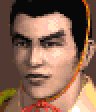
Sangokushi Returns portrait
-
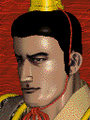
Sangokushi Returns PC version portrait
-

Romance of the Three Kingdoms II portrait
-
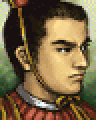
Sangokushi II remake portrait
-

Romance of the Three Kingdoms III portrait
-

Romance of the Three Kingdoms III PC version portrait
-

Romance of the Three Kingdoms IV portrait
-

Romance of the Three Kingdoms V portrait
-
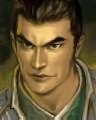
Romance of the Three Kingdoms VI portrait
-

Romance of the Three Kingdoms VII portrait
-
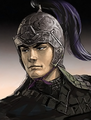
Romance of the Three Kingdoms VIII portrait
-
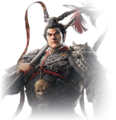
Romance of the Three Kingdoms 8 Remake portrait
-
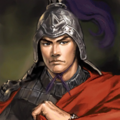
Romance of the Three Kingdoms IX portrait
-
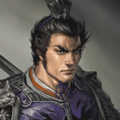
Romance of the Three Kingdoms X portrait
-
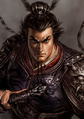
Romance of the Three Kingdoms XI young portrait
-
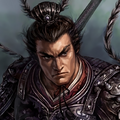
Aged portrait
-
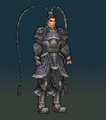
Romance of the Three Kingdoms XI render
-
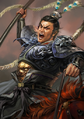
Romance of the Three Kingdoms XII portrait
-
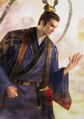
Alternate portrait
-

Sangokushi Spirits collaboration portrait
-

Sangokushi 12 comic collaboration portrait
-
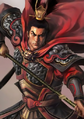
Sangokushi 12 Taisenban portrait
-
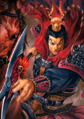
Alternate portrait
-
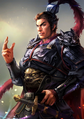
Romance of the Three Kingdoms XIII normal portrait
-
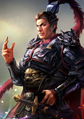
Aged normal portrait
-
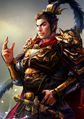
High rank normal portrait
-
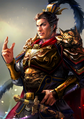
High rank aged normal portrait
-
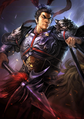
Battle portrait
-
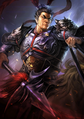
Aged battle portrait
-
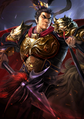
High rank battle portrait
-
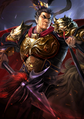
High rank aged battle portrait
-
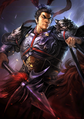
Battle portrait with Red Hare
-
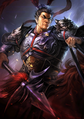
Aged battle portrait with Red Hare
-
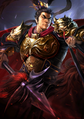
High rank battle portrait with Red Hare
-
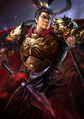
High rank aged battle portrait with Red Hare
-
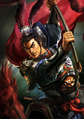
Alternate battle portrait
-
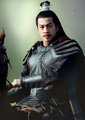
Sangokushi drama collaboration portrait
-
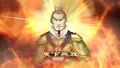
Sangokushi Spirits collaboration portrait
-

Romance of the Three Kingdoms XIII: Fame and Strategy Expansion Pack downloadable portrait
-
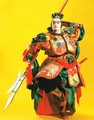
Ningyougeki Sangokushi collaboration portrait
-
-

Sangokushi Spirits collaboration portrait for 100man-nin no Sangokushi
-

Sangokushi Royale crossover in 100man-nin no Sangokushi Special
-
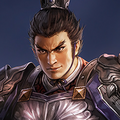
100man-nin no Sangokushi Special portrait
-
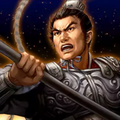
Ultra rare portrait
-
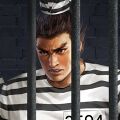
Suspect Ryofu
-
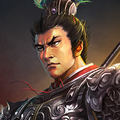
Alternate portrait
-
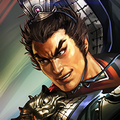
Alternate portrait 2
-

Sangokushi Legion portrait
-
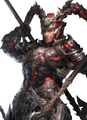
SR portrait
-
New Romance of the Three Kingdoms concept art
-
New Romance of the Three Kingdoms portrait
-
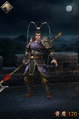
In-game model
-
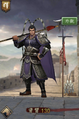
Revamped model
-
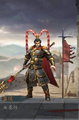
Alternate outfit
-
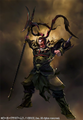
Sangokushi Heroes portrait
-
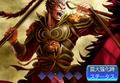
Alternate portrait
-
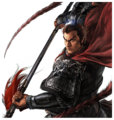
Sangokushi Hadou portrait
-
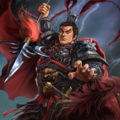
UR portrait
-
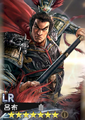
Alternate portrait
-
Mitsuteru Yokoyama's Sangokushi collaboration portrait
-
Sangokushi Senryaku-ban render
-
Sangokushi Internet portrait
-
Sangokushi Battlefield portrait
-
Sangokushi Online screenshot
-
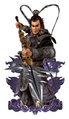
Pachinko Sangokushi render
-
Pachislot Sangokushi render
-
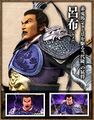
CR Sangokushi ~Eiyuu Shuuketsu~ render
-
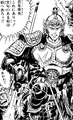
Sangokushi Sousou Den manga appearance
-
Koei Manga Pack appearance
-
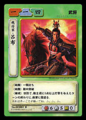
Sangokushi trading card artwork
-
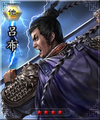
Card Collection portrait
-
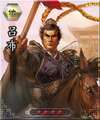
Alternate card portrait
-
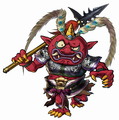
Aka-oni Lu Bu in Youkai Sangokushi
-
Kuro-oni Lu Bu
-

Ao-oni Lu Bu
-

Youkai Sangokushi Kunitori Wars artwork
-
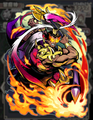
Special portrait
-
Oniou Rasen Lu Bu
.png)
.png)
.png)
.png)
.png)
.png)
.png)
.png)
.png)
.png)
.png)
.png)
.png)
.png)
.png)
.png)
.png)
.png)
.png)
.png)
.png)
.png)
.png)
.png)
.png)
.png)
.png)
.png)
.png)
.png)
.png)
.png)
.png)
.png)
.png)
.png)
.png)
.png)
.png)
.png)
.png)
.png)
.png)
.png)
.png)
.png)
.png)

.png)
.png)
.png)
.png)
.png)
.png)
.png)
.png)
.png)
.png)
.png)
.png)
.png)
.png)
.png)
.png)
.png)
.png)

.png)
.png)
.jpg)
.png)
.png)
.png)
.png)
.png)
.png)
.png)
.png)
.png)
.png)
.png)
-
Wo Long: Fallen Dynasty Concept art
-
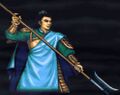
Sangokushi Eiketsuden screenshot
-

Sangokushi Sousou Den portrait
-

Sangokushi Sousou Den sprite
-

Sangokushi Sousou Den battle sprite
-
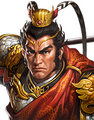
Romance of the Three Kingdoms: The Legend of Cao Cao portrait
-
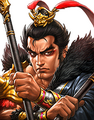
Alternate skin portrait
-
Romance of the Three Kingdoms: The Legend of Cao Cao sprite
-

Romance of the Three Kingdoms: The Legend of Cao Cao battle sprite
-

Battle sprite 2
-

Battle sprite 3
-
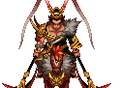
Alternate skin battle sprite
-
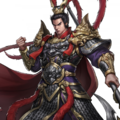
Shin Sangokushi Sousouden portrait
-
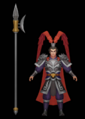
Shin Sangokushi Sousouden character model
-
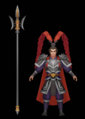
Character model 2
-
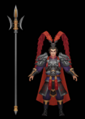
Character model 3
-
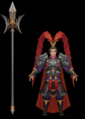
Character model 4
-
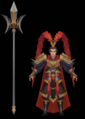
Character model 5
-
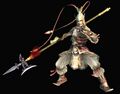
Dynasty Tactics render
-

Golf Taikai portrait
-
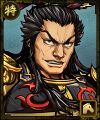
Sangokushi Royale crossover in 100man-nin no Nobunaga no Yabou
-
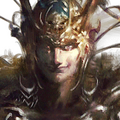
Sangokushi Rumble Lu Bu in Nobunaga no Yabou 201X
-

Houshin Engi Regulus portrait
-
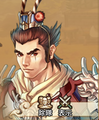
Fantasia Sango WEB portrait
-
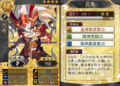
Sangokushi Baseball portrait
-
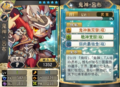
Alternate portrait
-
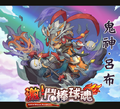
Alternate portrait 2
-

Rumble Burst portrait
-
Alternate portrait
-
Alternate portrait 2
-
Alternate portrait 3
-
Chinese version portrait
-
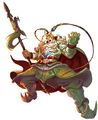
Sangoku Senki WEB artwork
-
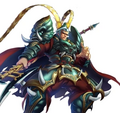
Chinese version artwork
-

Koihime Musou collaboration portrait in Sengoku Bushouki MURAMASA
-

Lovely URR portrait
-
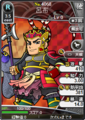
Browser Sangokushi portrait
-
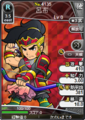
Alternate portrait
-
Alternate portrait 2
-

Alternate portrait 3
-
Alternate portrait 4
-
Alternate portrait 5
-
Alternate portrait 6
-
Alternate portrait 7
-

Paired portrait with Diaochan
-
Paired portrait with Dong Zhuo
-
Paired portrait with Wang Yun
-
Paired portrait with Zhang Liao
-

Paired portrait with Yanshi
-
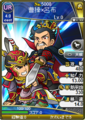
Paired portrait with Cao Cao
-
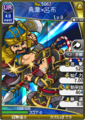
Paired portrait with Dian Wei
-
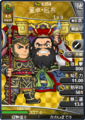
Paired portrait with Dong Zhuo
-
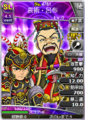
Paired portrait with Yuan Shu
-
Paired portrait with Zhang Fei
-
Paired portrait with Dong Zhuo and Diaochan
-

Paired portrait with Yanshi and Lushi
-

Hexa Wars portrait
-

Alternate portrait
-

Chinese version portrait
-
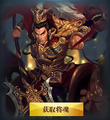
Chinese version alternate portrait
-
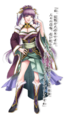
Juuzaengi ~Engetsu Sangokuden~ portrait
-
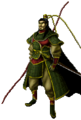
Rekishi Adventure: Quiz Sangokushi Tsuu DS portrait
-
Bakushō Sangokushi Biographical Dictionary appearance
-
Rekishi Paradise Gaiden Dai Sangokushi Club appearance
-
Don't Give Up, Diaochan chapter appearance
-
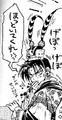
Ultimate Choice chapter appearance
-
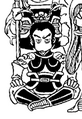
Sangokushi Poll Results section appearance
-
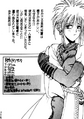
Female Lu Bu
-
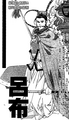
Sangokushi Kaitai Shinsho appearance
-
Comic Sangokushi True Episode appearance
-
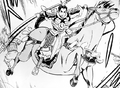
Campaign Against Dong Zhuo chapter appearance
-
The Wolf General and Grasshopper gag comic appearance
-
Trio the Pinch gag comic appearance
-
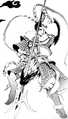
Decisive Battle at Xiapi chapter appearance
-
Comic Sangokushi True Episode Gaiden appearance
-
Maruwakari! Sangokushi appearance
-
Ryo Fu in Neko Sangokushi Nyaa
-
Sangokushi Spirits appearance
.png)

.png)
.png)
.png)
.png)
.png)
.png)
.png)
.png)
.png)
.png)
.png)
.png)
.png)
.png)
.png)
.png)

.png)

.png)
.png)
.png)
.png)
.png)
.png)
.png)
.png)
.png)
.png)
.png)
.png)
.png)
.png)
.png)
.png)
.png)
.png)
.png)
.png)
.png)
.png)
.png)
.png)
.png)
.png)
.png)
.png)
.png)
.png)
.png)
.png)
.png)
.png)
.png)
.png)
.png)
.png)
.png)
.png)
.png)
.png)
.png)
.png)
.png)
.png)
.png)
.png)
.png)
.png)
.png)
.png)
.png)
.png)
.png)
.png)
.png)
-
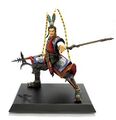
Lu Bu figure from Shin Sangoku Musou 4 Treasure Box
-
Super Deformed figure by Koei Tecmo Wave
.jpg)
.png)
.png)
.png)
.png)
.png)